Why rote learning failed?
Our classrooms still reward memory and punish curiosity. The economy our children are walking into rewards the opposite — and the gap is widening every year.
AK
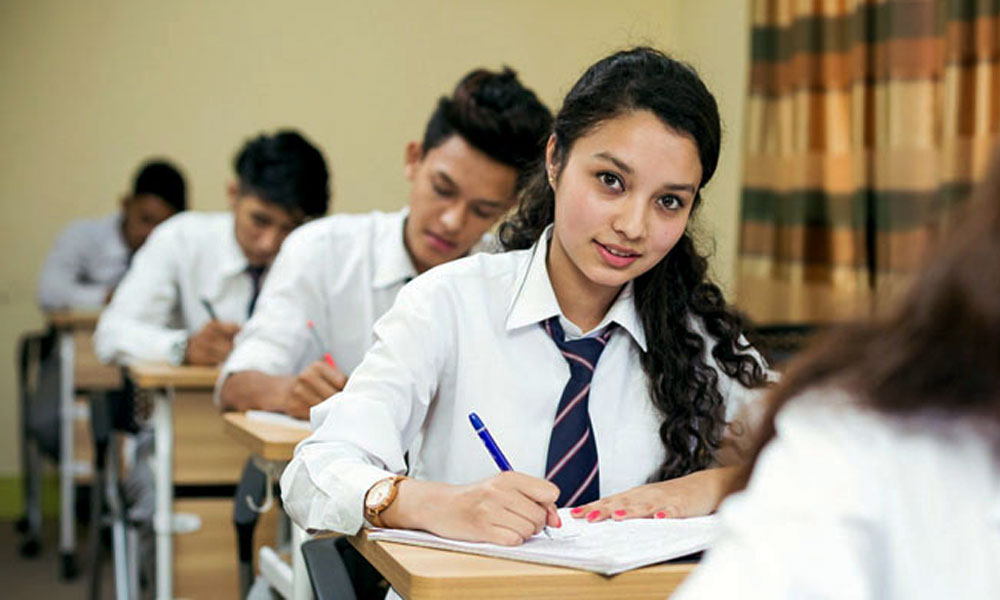
Ask a Nepali teenager to recite the causes of the Anglo-Nepalese War and many can, word for word. Ask them what they would have done differently, and the room goes quiet. That silence is not a failure of the students. It is the predictable output of a system built to measure recall — and almost nothing else.
The system was designed for a different century
Rote learning made sense when knowledge was scarce and expensive to access. A student who memorised the textbook carried the library in their head. But knowledge is no longer scarce. Every fact in every curriculum now sits one search away, and increasingly, an AI model will retrieve, summarise, and explain it faster than any student could recall it.
When the thing you are optimising for — recall — has been fully automated, optimising harder for it is not ambition. It is a trap. We are training a generation to compete with machines at the one task machines have already won.
"We are training a generation to compete with machines at the one task machines have already won."
What the exam hall never measures
A report card captures performance on a handful of days. It is silent on the qualities that actually shape a life and a career — the ones employers, universities, and communities say they want most:
- Curiosity — the drive to ask a better question, not just answer the given one.
- Resilience — treating a wrong answer as data, not a verdict.
- Judgment — knowing which of the ten available answers is the right one for this problem.
- Collaboration — because almost nothing worth building is built alone.
None of these fit neatly into a multiple-choice grid, so the system quietly decided they do not count. Students absorb that lesson faster than any other: the parts of them that are hardest to measure are the parts that matter least. That is exactly backwards.
The brain-drain is a symptom, not the disease
Every year, tens of thousands of Nepal's most capable young people leave — for universities and jobs abroad that reward the initiative our own classrooms trained out of them. We tend to frame this as an economic problem. It is really an educational one. When school teaches you that your worth is a number on a transcript, the most rational move is to take that number somewhere it will be paid more.
The schools beginning to reverse this are not the ones with the newest buildings. They are the ones changing what they measure — and therefore what they grow.
What replacing rote actually looks like
Moving beyond rote learning does not mean abandoning rigour, and it certainly does not mean abandoning teachers. It means pointing rigour at better targets. A student still learns set theory — but by using it to model a real problem, defending a choice, and revising when the evidence changes their mind. The teacher still leads; the difference is what the classroom now notices and celebrates.
This is the premise Nripaa is built on: personalised pathways that meet each child where they are, assessment that tracks growth rather than a single snapshot, and analytics that surface the curiosity and resilience an exam hall throws away — always with the teacher making the final call. Technology suggests; the teacher decides.
The future will not ask our children what their GPA was. It will ask what problems they can solve, whether they can adapt, and whether they can create. The sooner our classrooms start asking the same questions, the sooner Nepal stops exporting its own potential.
Former secondary-school teacher turned learning designer, writing about assessment, curiosity, and rebuilding Nepal's classrooms around every child.
View all articles →